Objective
This blog explains when a New Zealand business may need financial restructuring support. It is written for small business owners, directors, contractors, retailers, service providers, and growing companies that feel pressure from debt, cash flow gaps, tax arrears, or rising costs.
Key Takeaways
- Financial stress often starts quietly before it becomes serious.
- Late payments, unpaid tax, weak margins, and constant borrowing are warning signs.
- Good records help business owners see problems early.
- Financial restructuring is not only for failing companies.
- Early support can protect cash flow, reduce pressure, and improve decision-making.
Table Of Contents
- Why Financial Pressure Should Not Be Ignored
- Common Signs For Financial Restructuring Support
- Why Cash Flow Problems Often Come First
- When Debt Starts Controlling The Business
- Why Tax And Payroll Pressure Need Fast Attention
- How Better Planning Supports Recovery
- FAQs
- Conclusion
Why Financial Pressure Should Not Be Ignored
Most business problems do not arrive overnight. They build slowly.
One month, a customer pays late. The next month, supplier bills are harder to manage. Then GST, PAYE, rent, wages, and loan payments all arrive close together. The business may still be trading, but the owner starts making decisions from pressure instead of a clear plan.
That is usually the point where support becomes important.
Prudential Accounting and Taxation works with New Zealand businesses that need clear numbers, tax support, bookkeeping, and business guidance. For many owners, the first step is not a big restructure. It is simply understanding where the money is going and why the pressure keeps returning.
Financial restructuring is not always about closing, selling, or cutting everything. In many cases, it means reorganising debt, improving cash flow, reviewing costs, changing payment terms, and building a practical recovery plan.
The earlier a business acts, the more options it usually has.
Common Signs For Financial Restructuring Support
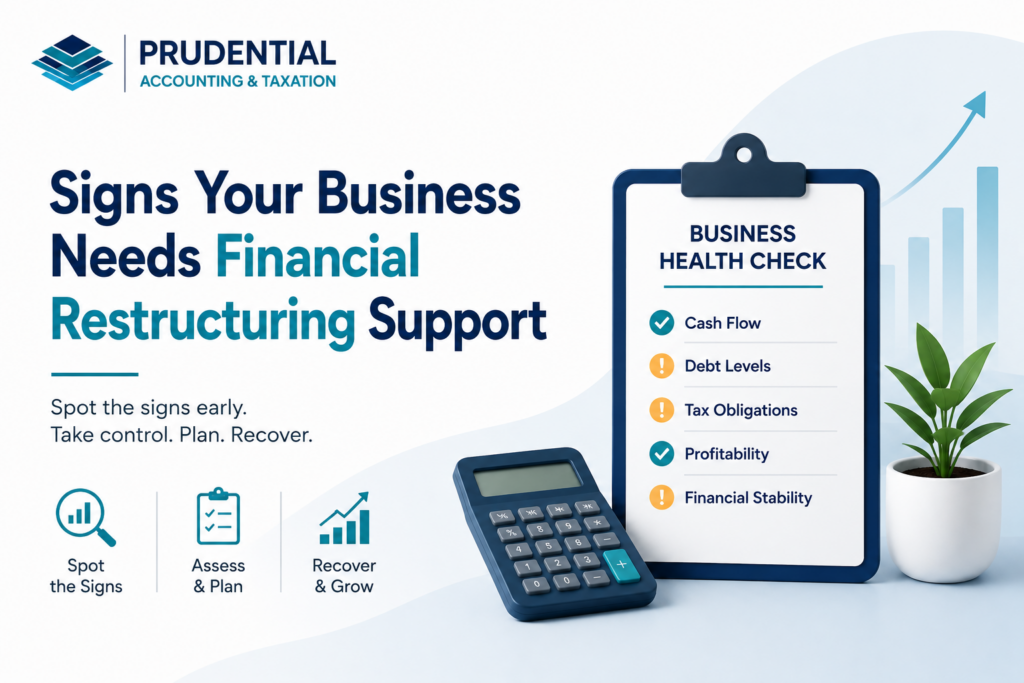
The clearest signs for Financial Restructuring often show up in daily routines. You may notice them before they appear in formal reports.
Here are common warning signs:
- You delay paying suppliers more often.
- You use overdraft or credit cards to cover normal bills.
- You are behind on GST, PAYE, income tax, or loan payments.
- Wages are becoming harder to cover.
- Sales are steady, but profit is still weak.
- You do not know your true monthly costs.
- You avoid opening bills or checking the bank account.
- You keep moving money between accounts to stay afloat.
- You are busy, but the business is not improving.
These signs for Financial Restructuring should not be ignored. They do not always mean the business is failing. They do mean the current structure may not be working well enough.
A business can look active from the outside and still be under pressure inside.
Why Cash Flow Problems Often Come First
Cash flow is the money moving in and out of the business. It sounds simple, but it is one of the most common reasons owners feel stuck.
A business can make sales and still run short of cash. This happens when invoices are paid late, stock costs rise, jobs take longer, or expenses come before income.
For example, a contractor may pay staff, materials, fuel, and insurance before the client pays the final invoice. A retailer may buy stock months before selling it. A service business may grow quickly but forget to adjust pricing, tax planning, or admin systems.
This is where business debt management becomes important. The goal is not only to pay debt. The goal is to understand which debts are urgent, which costs can be adjusted, and which payments need a proper schedule.
Some signs of financial restructuring are easy to feel but hard to explain. Cash flow pressure is one of them. It creates stress because the business owner is always reacting.
A clear cash flow review can show:
- Which customers pay late
- Which costs keep rising
- Which services or products are not profitable
- Which debts need priority
- Which payment terms need to change
- Which months are most risky
Once the numbers are clear, decisions become less emotional.
When Debt Starts Controlling The Business
Debt is not always bad. Many businesses use loans, supplier credit, or overdrafts to grow. The problem starts when debt controls every decision.
If a business borrows to cover normal running costs every month, the structure needs review. If old debts keep rolling forward while new costs keep building, the pressure will usually grow.
These signs for Financial Restructuring matter because debt can hide the real problem for a while. Borrowing may keep the business alive, but it may not fix weak margins, poor pricing, slow invoicing, or high overheads.
Useful restructuring advice NZ should look at the full picture, not just one loan or one overdue bill.
A proper review should ask:
- Why did the debt build up?
- Which debts carry the most pressure?
- Are interest costs too high?
- Are repayment dates realistic?
- Is the business pricing work correctly?
- Are owners taking drawings the business cannot support?
- Are stock, labour, or admin costs too high?
Good restructuring is practical. It is not about blame. It is about making the numbers honest.
Why Tax And Payroll Pressure Need Fast Attention
Tax and payroll pressure can become serious quickly. GST, PAYE, income tax, KiwiSaver, wages, and contractor payments must be planned carefully.
When tax money is used to pay other bills, the business may feel relief for a few weeks. But the problem usually comes back larger.
One of the strongest signs of financial restructuring is repeated tax arrears. It may mean the business is not setting money aside properly. It may also mean pricing, profit, or timing needs review.
This is where accurate bookkeeping matters. If records are late or messy, the owner cannot see the problem early. Clean accounts show what is due, what is overdue, and what the business can realistically afford.
Prudential Accounting and Taxation can be included in this stage because accounting support often helps owners understand tax timing, reporting, and cash flow pressure more clearly.
Business debt management should include tax debts, supplier debts, bank lending, and any personal guarantees linked to the company. Directors should take these issues seriously and seek proper advice before the pressure becomes harder to manage.
How Better Planning Supports Recovery
Recovery usually starts with a clear plan. Not a perfect plan. A realistic one.
Financial recovery planning looks at the business as it is today. It does not rely on hope, best-case sales, or vague promises. It looks at numbers, payment dates, debt, tax, income, profit, and owner decisions.
A useful recovery plan may include:
- A weekly cash flow forecast
- A list of urgent and non-urgent debts
- A review of pricing and margins
- Better invoicing and follow-up
- Cost cuts that do not harm service quality
- Payment arrangements where suitable
- A tax planning schedule
- Clear monthly reports
- A decision point if recovery is not working
These signs for Financial Restructuring are easier to manage when the owner stops guessing. Numbers give direction.
Financial planning for businesses also helps owners look beyond the current month. It can show whether the business needs new systems, better pricing, less debt, or a different structure.
Good restructuring advice NZ should be practical and calm. It should help the owner see what can be fixed, what must change, and what should not be delayed.
Get Expert Financial Restructuring Support Before Problems Grow
If your business is facing cash flow pressure, growing debt, tax arrears, or declining profitability, early action can make all the difference. At Prudential Accounting & Taxation, we help New Zealand business owners gain clarity through practical financial recovery planning, business debt management, cash flow forecasting, and restructuring support. Let our team help you build a stronger financial foundation and create a clear path forward.
Book Your Free Business ReviewFAQs
What Are The First Signs A Business Needs Financial Restructuring?
The first signs often include late supplier payments, tax arrears, cash flow gaps, rising debt, weak profit, and constant overdraft use. The business may still be operating, but the owner may feel pressure every week. These signs should be reviewed early because early action gives more room to plan.
Is Financial Restructuring Only For Businesses Close To Failure?
No. Financial restructuring can help businesses before they reach a crisis point. It can support companies that are growing too fast, carrying too much debt, facing slow payments, or struggling with tax timing. The goal is to improve structure before the pressure becomes serious.
How Does Financial Recovery Planning Help A Small Business?
Financial recovery planning helps the owner see what is urgent, what can wait, and what needs to change. It may include cash flow forecasts, debt schedules, tax planning, cost reviews, and better reporting. A written plan helps reduce guessing and improves daily decisions.
When Should A Business Owner Seek Restructuring Advice?
A business owner should seek advice when cash pressure becomes regular, not occasional. If bills are delayed every month, tax is overdue, debt is growing, or wages are hard to cover, it is time to ask for help. Waiting too long can reduce available options.
Can Better Bookkeeping Prevent Financial Trouble?
Better bookkeeping cannot fix every issue, but it can reveal problems earlier. Accurate records show unpaid invoices, rising costs, tax due dates, weak margins, and cash flow gaps. Owners make better choices when they can trust their numbers.
What Is The Difference Between Restructuring And Cost Cutting?
Cost cutting only reduces expenses. Restructuring looks at the full business. It may include debt review, payment timing, pricing, tax planning, cash flow systems, staffing, supplier terms, and reporting. Cutting costs without a full review can sometimes harm the business.
Can A Profitable Business Still Need Restructuring Support?
Yes. A business can show profit on paper but still struggle with cash. This can happen when customers pay late, stock ties up money, debt repayments are high, or tax has not been planned properly. Profit and cash flow are connected, but they are not the same thing.
Conclusion
Financial pressure should never be ignored. Small problems can grow when the owner is too busy, too stressed, or too unsure to stop and review the numbers.
The strongest signs for Financial Restructuring are often found in everyday habits. Bills are delayed. Tax is pushed back. Debt keeps growing. Cash runs short even when work is steady. These signs do not mean the business has failed. They mean the business needs a clearer plan.
With proper financial recovery planning, many owners can understand the pressure, set priorities, and make better decisions before the situation becomes harder.
Prudential Accounting and Taxation fits naturally into this conversation because good accounting, tax support, and planning help business owners see the truth behind the numbers.
“Take control of the numbers before the numbers start controlling your business.”