Objective
Help first-time business owners in Auckland understand the practical hurdles that come up during company registration, so they avoid delays, rejected filings, and setup mistakes that cost money later.
Key Takeaways
- Registering a company online looks simple, but structure and compliance decisions get rushed in the process.
- The wrong business structure creates tax and liability problems that surface months down the track.
- Company registration services catch errors before IRD or the Companies Office does.
- GST, PAYE, and director obligations are the three things most new owners miss entirely.
- Prudential Accounting and Taxation handles registration and tax setup together, so nothing gets left out.
Table of Contents
- What Actually Goes Wrong During Company Registration?
- Why Does Picking a Business Structure Trip People Up?
- What Compliance Steps Get Missed Most Often?
- How Do Company Registration Services Help?
- What Should You Look For in Registration Support?
- What Does Getting It Wrong Actually Cost You?
- DIY Registration vs Working With an Advisor
- FAQ
- Conclusion
A builder came to us last year after registering his company himself through the Companies Office website. He’d picked a generic structure off a template without realising it left his personal assets exposed once a payment dispute landed on a job. Fixing it afterward cost him more than proper advice would have upfront.
That’s not an unusual story. Company registration in New Zealand takes a form, a fee, and a few minutes online. What it doesn’t tell you is which structure fits your situation, what else you need to register for, or what happens when a gap in that setup surfaces six months later.
Most new owners don’t get tripped up by the form itself. They get tripped up by everything the form assumes they already know.
- Registration is quick online, but structure and compliance decisions get made too fast in the process.
- Wrong entity type, missed GST registration, and unclear director duties are the most common mistakes.
- Company registration services catch these issues before they turn into penalties or personal liability.
- Prudential Accounting and Taxation manages registration and tax setup as one process, not two.
What Actually Goes Wrong During Company Registration?
Most registration problems have nothing to do with the form. They come from decisions made in the five minutes before it gets filled in.
Owners want a company number fast so they can start invoicing. In that rush, the structure conversation gets skipped, along with the GST threshold check and the director responsibilities that come with the certificate.
Three issues come up again and again with new clients doing company formation Auckland business owners rarely get warned about elsewhere:
- Registering as a company when a sole trader setup would’ve suited them better.
- Missing GST registration until turnover’s already past the $60,000 threshold.
- Not knowing what a director is personally liable for once the company starts trading.
None of this shows up on the registration screen. It shows up later, usually at tax time or when something goes wrong.
Why Does Picking a Business Structure Trip People Up?
Structure decides how much tax you pay and how exposed your personal assets are if something goes wrong. Getting it wrong means restructuring later, and that costs more than getting advice the first time round.
A sole trader setup suits someone working alone with low risk, like a freelance tradesperson doing small jobs on the side. A limited company suits someone carrying real liability, like a builder managing subcontractors on a live site.
The Companies Office form doesn’t ask which one actually fits your situation. It just processes whatever you select. If nobody’s walked you through the trade-offs beforehand, you’re guessing.
What Compliance Steps Get Missed Most Often?
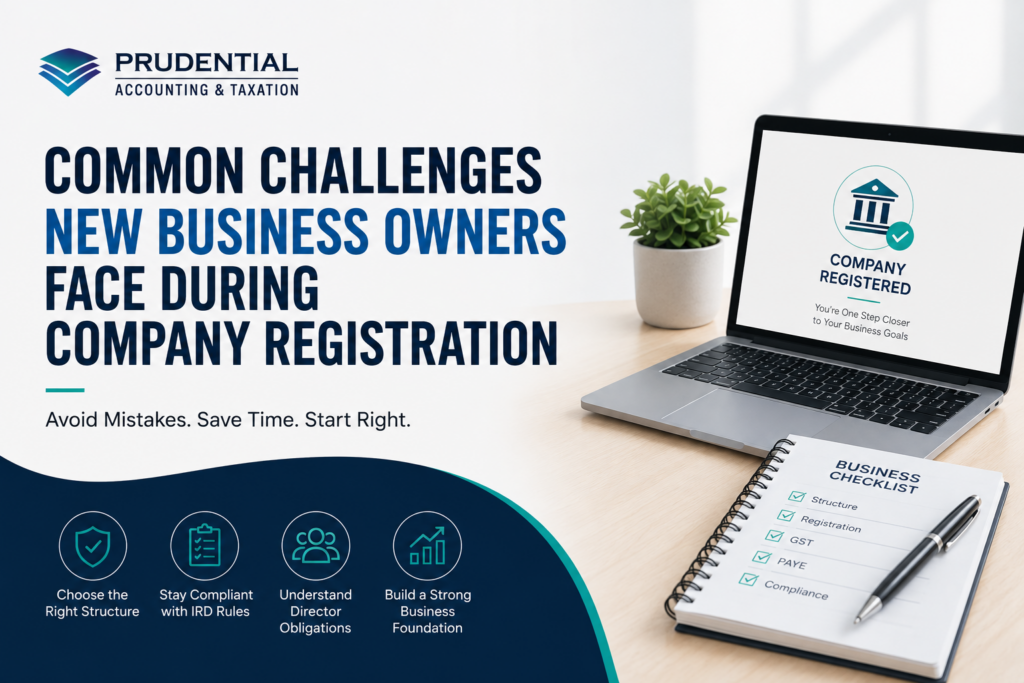
Compliance gaps happen because registration and tax setup get treated as two separate jobs when they should be one. These are the ones we see most:
- GST registration: required once turnover passes $60,000 a year, often missed until well after the threshold.
- PAYE setup: needed from the moment you hire your first employee, not after their first payday’s already due.
- IRD number linking: your company needs its own IRD number, separate from your personal one.
- Director obligations: legal duties under the Companies Act that apply from day one.
- Shareholder agreements: skipped by most owners going into business with a partner, until a disagreement makes it urgent.
A childcare business we took on had been trading four months before realising PAYE was never set up for their first two staff hires. That’s not a rare situation. It’s what happens when registration and tax obligations aren’t handled together from the start.
How Do Company Registration Services Help?
Company registration services exist to catch what the online form never asks about. A good advisor talks through your situation before anything gets filed, not after.
That means checking your structure actually fits how you’ll operate, confirming what else needs registering beyond the company itself, and getting GST and PAYE set up from day one instead of fixing it retroactively.
At Prudential Accounting and Taxation, our Company Setup Services cover the full picture. Formation, IRD registration, GST, and payroll get handled together, so a builder, a car dealer, or a hospitality operator isn’t left working out which agency needs what on their own.
What Should You Look For in Registration Support?
Not every registration service does more than file paperwork. Before committing to one, it’s worth asking what’s actually included.
- Does it cover structure advice, or just the filing itself?
- Are GST and PAYE registration part of the service, or billed separately?
- Will someone explain director duties in plain language?
- Does support continue after registration, or does it end once the certificate arrives?
A firm worth using will ask about your business before recommending anything. If they’re filing your registration without asking what you actually do, take that as a warning sign.
What Does Getting It Wrong Actually Cost You?
Registration mistakes rarely show up straight away. They surface at tax time, during an IRD review, or when a dispute lands and your structure doesn’t protect you the way you thought it would.
Late GST registration means backdated returns and penalties on turnover you’ve already spent. A missed PAYE setup means catching up on payroll tax with interest attached. The wrong structure can mean restructuring costs running into thousands, plus legal fees to untangle it.
None of these costs are visible on registration day. That’s exactly why they catch people off guard months later.
DIY Registration vs Working With an Advisor
| Factor | DIY Registration | Working With an Advisor |
| Speed to get a company number | Fast, often same day | Slightly slower, structure checked first |
| Structure suited to your business | Guesswork, no guidance | Assessed before anything’s filed |
| GST and PAYE setup | Easy to miss or delay | Built into the process from the start |
| Director duties explained | Not covered | Walked through directly |
| Cost if something’s wrong later | High, restructuring plus penalties | Lower, caught before filing |
| Ongoing support | None | Continues after registration |
FAQ
1. How long does company registration take in Auckland?
The Companies Office side is usually processed within a day or two once the paperwork’s correct. Getting GST, PAYE, and your IRD number sorted properly alongside it takes closer to a week when it’s done thoroughly.
2. Do I need an accountant to register a company, or can I do it myself?
You can register yourself through the Companies Office website directly. Most owners who go that route end up fixing structure or GST issues later, and that costs more than getting advice would have upfront.
3. What’s the most common mistake new business owners make when registering?
Picking a structure without understanding the tax and liability difference between options. A lot of owners default to a limited company because it sounds more official, without checking whether it actually suits how they’re operating.
4. When do I need to register for GST?
Once turnover passes $60,000 in a 12 month period, though registering earlier can suit some businesses. Waiting until you’re already over the threshold means backdated returns and penalties.
5. Can Prudential Accounting and Taxation handle both registration and ongoing tax filing?
Yes. Registration, GST, PAYE, and annual accounts are managed under one relationship, so you’re not coordinating separate services yourself.
Conclusion
Registering a company is the easy part. The decisions around it, structure, GST timing, director duties, are where most new owners get caught out, and those mistakes rarely show up until they’re expensive to fix.
Getting proper company formation Auckland advice before you file saves you from redoing the work later.
If you’re setting up a new business and want it done right the first time, get in touch with Prudential Accounting and Taxation on (09) 298 7291, or explore our Company Setup Services.