A client in Papakura once sat across from us with a P&L showing a solid quarterly profit, and a bank balance that couldn’t cover Friday’s supplier invoice. He wasn’t confused. He was frustrated. His numbers said one thing, his account said another, and nobody had explained why.
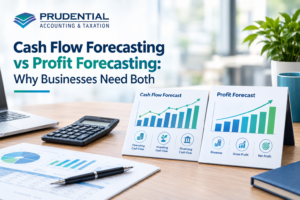
That gap is common, and it comes down to one mix-up: treating profit and cash as the same thing. They’re not. Understanding cash flow forecasting vs profit forecasting is what separates business owners who get blindsided by a good-looking quarter from those who see a cash squeeze coming weeks out.
Here’s how the two forecasts actually differ, and why relying on only one leaves a real blind spot.
Key Takeaways
- Cash flow forecasting tracks the money actually moving in and out of your bank account.
- Profit forecasting measures whether income exceeds costs on paper, regardless of when cash lands.
- A profitable business can still run out of money if payments are slow or tied up in unpaid invoices.
- New Zealand’s Small Business Survey found cash flow shortages are one of the top reasons owners rate their business as unsuccessful, right behind low revenue.
- Running both forecasts side by side catches timing problems before they become emergencies.
What Is Cash Flow Forecasting?
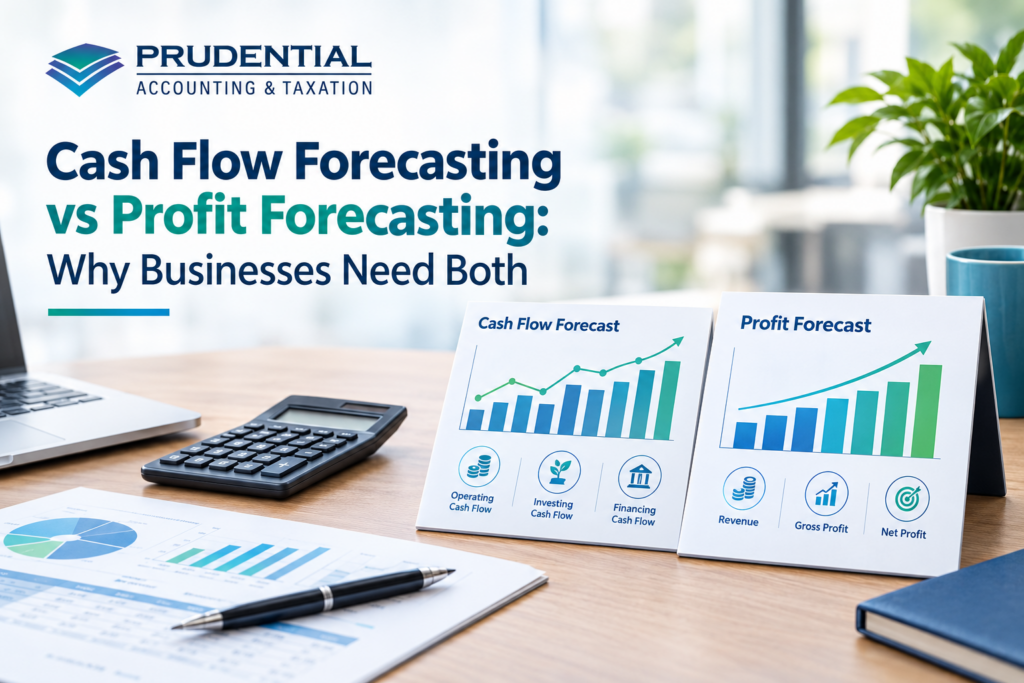
Cash flow forecasting predicts what’s actually in your bank account over a set period. It answers one question: can you cover what’s due?
A working cash flow forecast NZ owners can trust usually tracks:
- Expected cash coming in from sales and paid invoices
- Fixed costs like rent, wages, and loan repayments
- Variable costs such as stock or seasonal expenses
- The lag between issuing an invoice and actually getting paid
- A running balance, checked weekly or monthly
This is the forecast that tells you whether payroll clears on Friday. It has nothing to do with how the quarter looked overall.
What Is Profit Forecasting?
Profit forecasting estimates whether revenue will beat costs over time, using accounting entries rather than actual cash movement. It answers a different question: does the business model work?
Profit forecasting typically includes:
- Revenue booked when it’s earned, not when it’s paid
- Cost of goods sold and operating expenses
- Depreciation and other non-cash entries
- Tax obligations tied to reported earnings
- Gross and net margins across the period
This is the forecast you’d show a bank or an investor. It proves the business makes sense. It won’t tell you what’s in your account this Tuesday.
Cash Flow vs Profit: The Real Difference
The gap between cash flow vs profit comes down to timing. Profit gets recorded the moment a sale happens. Cash gets recorded when the money physically arrives, and those two dates rarely match.
| Factors | Cash Flow Forecast | Profit Forecast |
| Measures | Money actually in and out | Revenue minus expenses on paper |
| Timing | When cash moves | When income or costs are recorded |
| Main use | Paying bills, staying afloat | Long-term viability |
| Includes | Loan repayments, GST | Depreciation, accruals |
| Warning it catches | Running dry despite sales | A business model that’s losing money |
A business can post $50,000 profit for the month and still have almost nothing in the bank, simply because most of those invoices haven’t been paid yet. That’s not sloppy bookkeeping. It’s just how the two numbers work.
Why NZ Businesses Get Caught Out Without Both
Profit looks reassuring, so owners often stop checking once they see a healthy number. But a strong P&L can hide a cash timing problem sitting right underneath it.
We see this play out differently depending on the industry:
- Construction and trades: Big contracts get invoiced, but 30 to 60-day payment terms leave a real gap between doing the work and getting paid for it.
- Hospitality: A profitable summer can still leave winter cash reserves thin, since seasonal swings hit the bank balance harder than the P&L.
- Retail and services: Stock and supplier payments often fall due before customer payments arrive, especially during a growth push.
The Ministry of Business, Innovation and Employment ran a Small Business Survey asking owners why they didn’t consider their business successful. Not enough revenue came first, and not enough cash flow came right after it. That’s owners naming cash flow as a real problem, not an accountant’s talking point.
Making the Two Forecasts Work Together
Run side by side, cash flow and profit forecasting cover both the short-term survival question and the long-term viability question. Neither one does the other’s job.
A practical way to run them:
- Profit forecasting tells you if the business model actually works over time.
- Cash flow forecasting tells you if you survive the gaps in between.
- Check cash flow weekly or monthly, tighter during growth or slow patches.
- Check profit quarterly or annually to track the bigger trend.
- When the two disagree, it’s almost always a timing or collections issue, not a failing business.
A tradie chasing a big new contract can look highly profitable on paper while genuinely struggling to cover next week’s supplier bill. Spotting that gap early is what keeps a good contract from turning into a cash crisis.
What Business Cash Flow Planning Should Include
Real business cash flow planning goes past a spreadsheet built on optimistic guesses. It has to reflect how clients actually pay, not just what the contract says.
A plan worth trusting includes:
- Actual payment history, not just stated payment terms
- A buffer for the client who always pays late, because there’s always one
- GST and PAYE dates built in as fixed, non-negotiable outgoings
- Seasonal dips mapped out ahead of time, not discovered mid-quarter
- A rolling 13-week view for short-term accuracy, plus a 12-month view for the bigger picture
This matters even more if your business is applying for finance. Lenders want proof that repayments are covered by actual cash, not just projected profit on a spreadsheet.
Ready to See Both Sides of Your Numbers?
Guessing your cash position, or trusting profit alone to tell the full story, is how avoidable cash crunches happen. Prudential Accounting builds cash flow and profit forecasts that reflect how money actually moves through your business, not just how it reads on paper. Ask us about Business Planning & Strategy, get support through Business Advisory & Consulting, or contact us to talk through where your forecasting stands today.
FAQs
What’s the real difference between cash flow and profit?
Profit is revenue minus expenses, recorded when a sale is earned. Cash flow is the actual money in your bank account, recorded when it physically arrives. A business can be profitable on paper and still be short on cash if customers pay slowly.
Can a profitable business still run out of money?
Yes, and it happens more than people think. If a lot of income sits in unpaid invoices, even a strong quarter can leave you unable to cover wages or rent on time.
How often should I check my cash flow forecast?
Weekly or monthly works for most small businesses, tighter during growth or a slow patch. A rolling 13-week view gives you enough warning without becoming a full-time job.
Does a small business really need both forecasts?
Yes. Even a simple weekly cash tracker alongside a basic quarterly profit summary is enough to catch a problem early, well before it turns into a crisis.
Who can set this up for my business?
An accountant who knows your industry’s payment cycle can build both and keep them current as your business changes, which is exactly what our forecasting and advisory work covers.